

The Story of the Geiger Drive
A Small Yellow Box That Changed Everything
At the very beginning of Spurr Audio, things were much simpler.
The first pedals I built carried minimalist one color graphics printed over solid color enclosures. Production was slow and almost entirely made to order because, at the time, I still had a regular full time job that barely left enough hours in the day to assemble complete batches of pedals.
Like many small pedal builders starting out, Spurr Audio began with a mix of custom clones and a very small original lineup.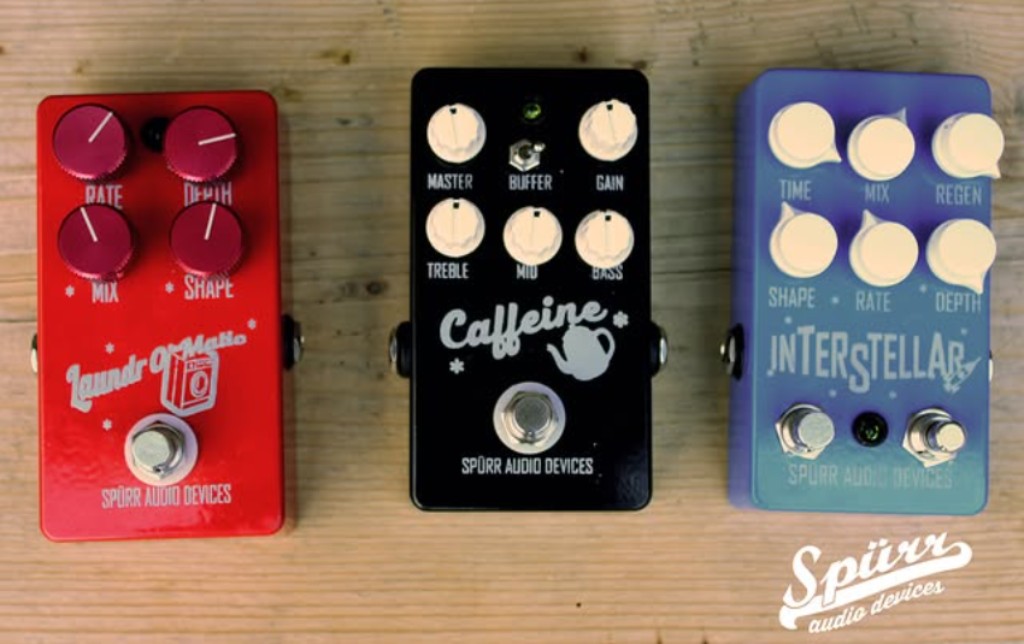
One of the first pedals was the Laundr O’ Matic Tremolo, an optical tremolo with a waveform control that could sweep between square and sine wave shapes. Simple, practical, and musical. Alongside the traditional depth and rate controls, it also featured a mix knob, something I always appreciated in modulation effects.
Then came the Interstellar Delay, which was probably the first real glimpse into my obsession with modulation, unstable textures, and controllable movement inside effects. I always loved delays that felt alive rather than static. The Interstellar Delay included a built in modulation section that reacted to the intensity of the guitar attack. In practice, it behaved almost like a controlled glitch effect tied directly to the player’s dynamics instead of random instability.
Another unusual feature was a switch that manipulated the delay tempo in real time. It wasn’t tap tempo, but it created strange pitch shifting transitions and unpredictable rhythmic behavior that stayed with me for years. I actually smiled recently when I discovered one of those pedals listed among the gear of Juan Aldrete. Seeing one of those early experiments survive all this time felt surreal.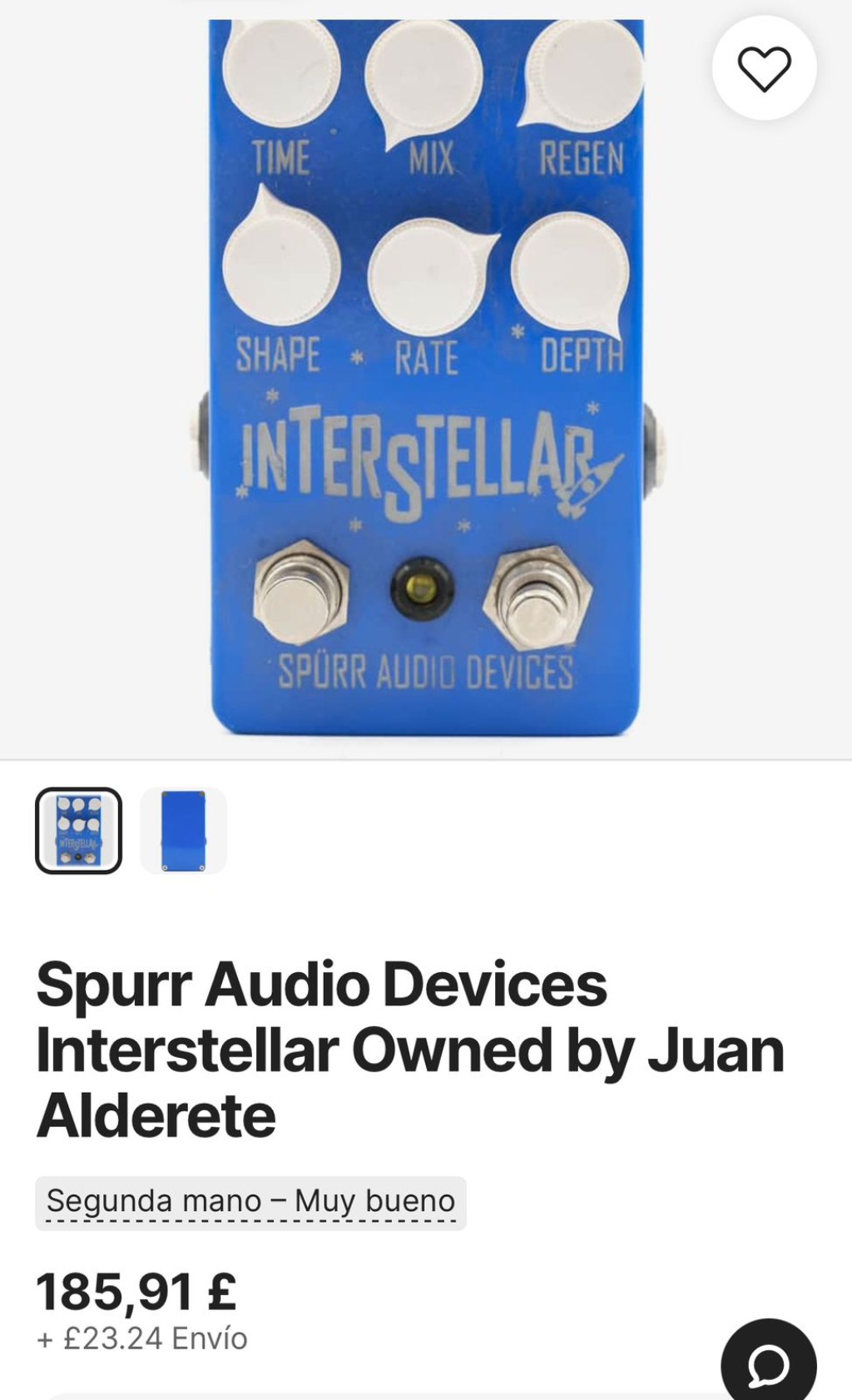
The third pedal in the original Spurr Audio lineup was the Caffeine.
That pedal was designed as a complete utility tool. With the gain at zero, it worked as a transparent EQ and clean boost. It featured a full three band parametric EQ section with bass, mids, and treble controls. But as the gain increased, the pedal evolved through multiple personalities: clean boost, soft overdrive, aggressive overdrive, distortion, and eventually fuzz like textures depending on the guitar being used. Sometimes I still think it deserves a comeback.
After that initial lineup failed to grow the way I had hoped, I spent years experimenting with different ideas while changing jobs and trying to keep Spurr Audio alive in between everything else. Eventually, after a long period of inactivity and after working in an industrial park surrounded by machinery every single day, something shifted creatively.
That industrial environment stayed in my head.
The worn metals, warning labels, old equipment, analog meters, faded paint, mechanical textures, all of it slowly became part of the visual language that would later define the Geiger Drive.
When I decided to seriously return to pedal building, I created a pedal inspired by the old LoFoMoFo circuit, something I had wanted to build for years. It was also the first time I explored the rugged industrial aesthetic that would later become closely associated with Spurr Audio.
Not long after, the Geiger Drive was born.
At its core, it was inspired by the classic DOD 250 circuit, but I wanted it to feel like a forgotten industrial machine rather than just another overdrive pedal. I added a VU meter and placed everything inside a heavily weathered yellow enclosure that looked like it had been recovered from an abandoned laboratory or power station.
At the same time, I also built a matching fuzz pedal inspired by the Big Muff, this time in green with a circular analog meter.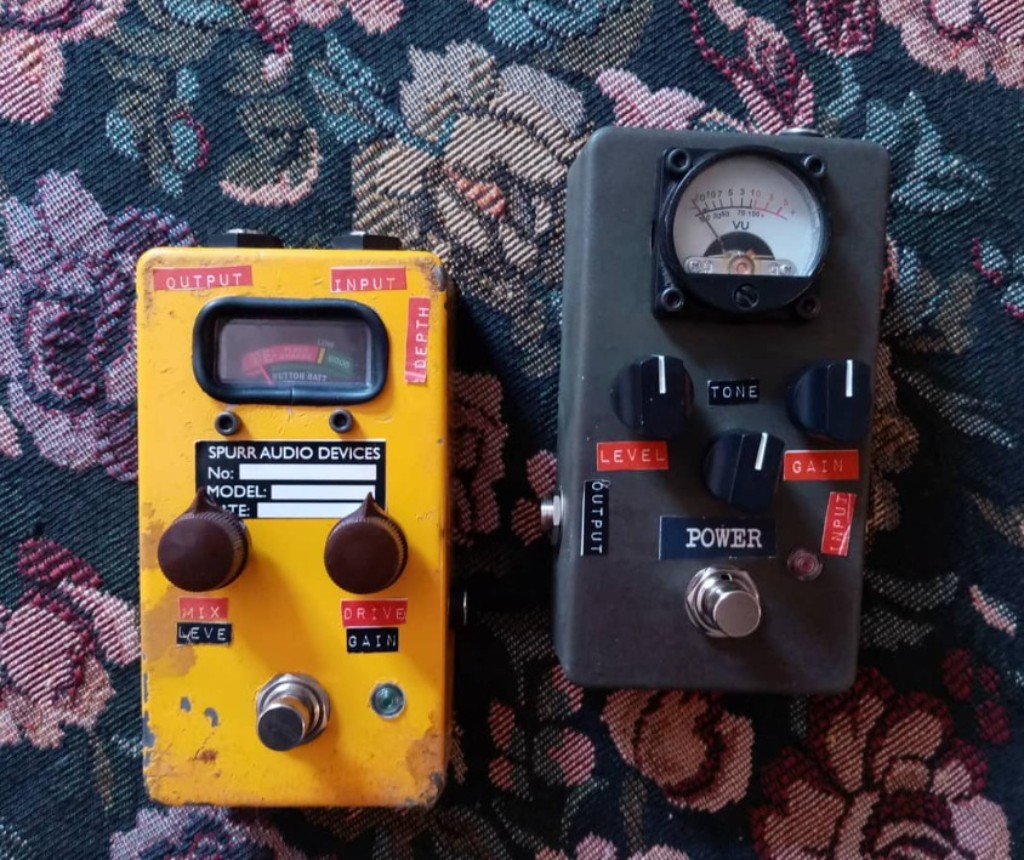
I listed a few of them on Reverb.com without expecting much.
Miraculously, they sold out that same night.
That moment changed everything.
The Geiger Drive, without a doubt, became the turning point that gave Spurr Audio a clear concept and its own distinct personality.
For the first time, it felt like people truly connected with what I was making, not only sonically, but emotionally and visually too. The Geiger Drive slowly started gaining attention, and over the years it became one of the defining pedals of Spurr Audio.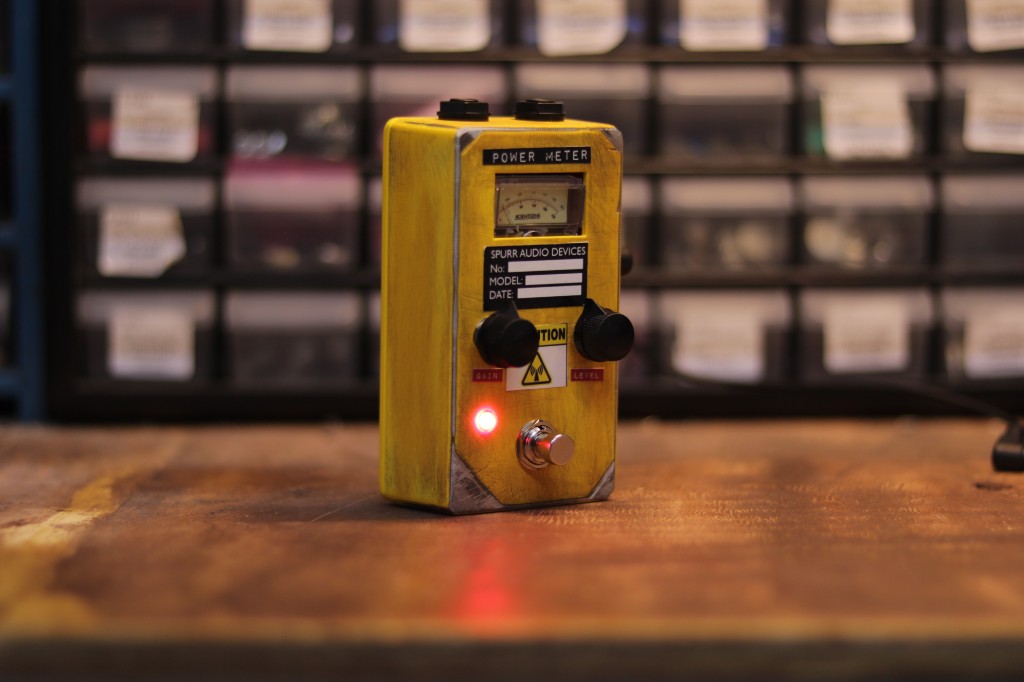

Today, the final Geiger Drive has officially sold.
And with that, the pedal is now discontinued.
It’s difficult to describe the feeling honestly. The Geiger Drive became more than an overdrive pedal to me. It represented the moment when Spurr Audio truly found its identity.
I’m deeply grateful to every single person who supported the pedal throughout its production years.
Will it ever come back?
Possibly.
But if it does, it probably won’t return exactly as we know it today. And truthfully, I don’t know when, or if, that moment will happen.
For now, the Geiger Drive rests as a strange little yellow machine that somehow helped shape the history of Spurr Audio.
